
Best Price Intelligence Tools for 2026
Compare the 7 best price intelligence tools for 2026: Prisync, Wiser, Intelligence Node, Zenrows, and more. Find the right fit for your pricing workflow.



TL;DR: The best price intelligence tools for 2026 range from managed dashboards to custom scraping infrastructure. Top picks include Prisync ($99/mo) for e-commerce repricing, Wiser for enterprise retail, Intelligence Node for high-frequency monitoring, and Zenrows ($69/mo) for teams building large-scale custom pipelines. Choose based on product-matching accuracy, market coverage, refresh frequency, and whether the tool's built-in fields fit your workflow.
Price intelligence tools help e-commerce retailers and brands track competitors' prices, accurately match offers, and make informed repricing decisions. Unlike basic price monitoring, which simply logs price changes, price intelligence adds context: product matching, stock availability, promotions, regional pricing, and historical trends, so you can act on accurate data rather than misleading price signals.
The 7 best price intelligence tools for 2026 are:
- Prisync – Best for e-commerce competitor price tracking and dynamic repricing ($99/month)
- Wiser Solutions – Best for enterprise retail price intelligence (custom pricing)
- Intelligence Node – Best for high-frequency competitor price monitoring (from $5,000/month)
- Minderest – Best for multi-channel price monitoring (custom pricing)
- Price2Spy – Best for URL-based competitor price tracking ($39.95/month)
- Competera – Best for enterprise AI price optimization (custom pricing)
- Zenrows – Best for building custom price intelligence pipelines ($69/month)
This comparison covers managed retail dashboards and scraping infrastructure for custom pipelines. Each tool is evaluated on product matching accuracy, market coverage, refresh frequency, repricing capabilities, and pricing.
What to Look for in Price Intelligence Software
Price intelligence software is only useful when the data it collects is accurate, up-to-date, and sufficiently specific to inform your pricing decisions. Keep these factors in mind when choosing price intelligence tools.
Product Matching Accuracy
Choose price intelligence software that can match each product to the correct competitor offer. Competitor price tracking should compare the same model, variant, bundle, condition, seller type, and availability before treating a lower price as comparable.
Market Coverage and Refresh Frequency
The price intelligence software you choose should cover the e-commerce sites and marketplaces where your buyers compare your products, as well as the relevant regions and currencies. For e-commerce price-monitoring tools, refresh frequency is just as important because stale data can lead you to react to an old promotion, miss a new price drop, or compare prices from the wrong market.
Alerts, Repricing, and Pricing Controls
Good price intelligence software should help you decide which price changes need action and which ones to ignore. It should alert you to price drops, stock changes, and promotions, and then let you set margin limits, minimum prices, and repricing rules so that an out-of-stock offer or short-term discount doesn’t trigger an unintended price reduction.
Pricing Data Customization
Check whether the price intelligence software lets you customize which fields it collects, rather than just using the platform’s defaults. Standard retail price intelligence may cover core fields such as price, stock status, and basic product data. But custom price intelligence pipelines may also need shipping costs, product attributes, regional prices, or other fields tied to your catalog and pricing model.
Skip the blocks. Try Zenrows free and get clean web data without the anti-bot fight.
The Best Price Intelligence Tools in 2026
To see which price intelligence software fits you best, let’s compare the best price intelligence tools by their use cases, pros, cons, and pricing.
1. Prisync: Best for E-Commerce Competitor Price Tracking and Dynamic Repricing
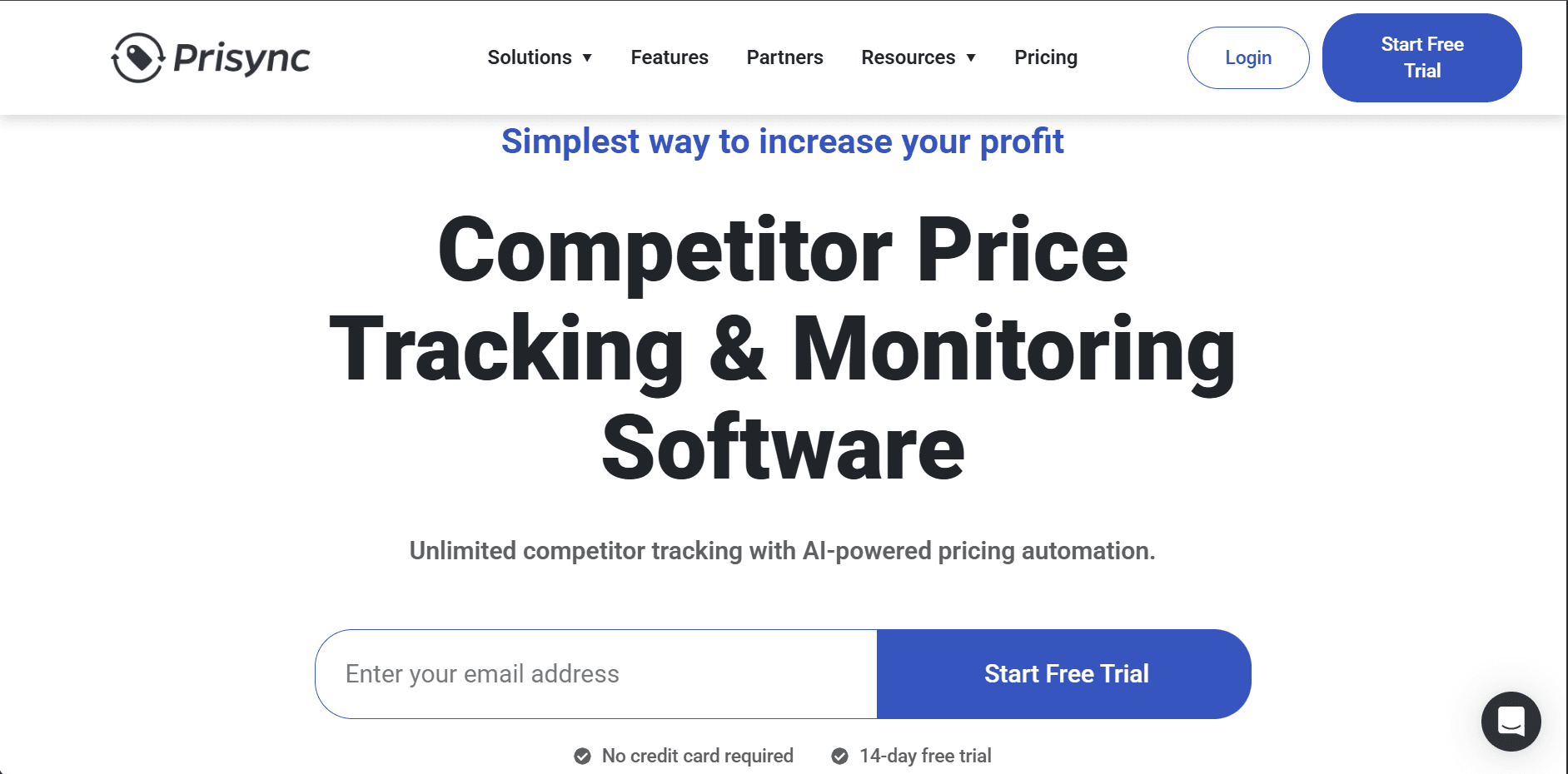
Prisync is a competitor price tracking and monitoring software for e-commerce merchants and manufacturers. The platform brings competitor prices and stock availability into one dashboard, where you can compare offers, create reports, set alerts, and apply dynamic pricing rules. It covers e-commerce sites and marketplaces across 50+ countries with multi-currency support.
Prisync supports three monitoring models. URL-based monitoring tracks the exact competitor product pages you add. Channel-based monitoring fetches competitor data from Google Shopping and Amazon using Global Trade Item Number (GTIN), Universal Product Code (UPC), or European Article Number (EAN) codes. Hybrid monitoring combines both methods, so you can track sales-channel results and high-priority competitor URLs in one place.
👍Pros
- Prisync lets you manage URL, channel, and hybrid tracking setups from one platform.
- It shows your price position relative to competitors, including when your offer is above, below, or aligned with the market.
- Prisync includes Excel reports and alerts for price and stock changes.
- It supports dynamic pricing, allowing you to set rules that automatically update prices.
👎 Cons
- The Professional plan limits URL-based monitoring to 100 products.
- It charges an additional 20% for API access.
- Prisync refreshes channel-based monitoring once per day, missing intraday price changes.
- It limits variant tracking for sizes, colors, and product types to the Premium plan and above.
Pricing
- It starts at $99/month for URL-based monitoring, with a 14-day free trial.
Best For
E-commerce merchants and brands that monitor competitor prices across a defined product catalog and want to apply rule-based repricing on the same platform.
2. Wiser Solutions: Best for Enterprise Retail Price Intelligence
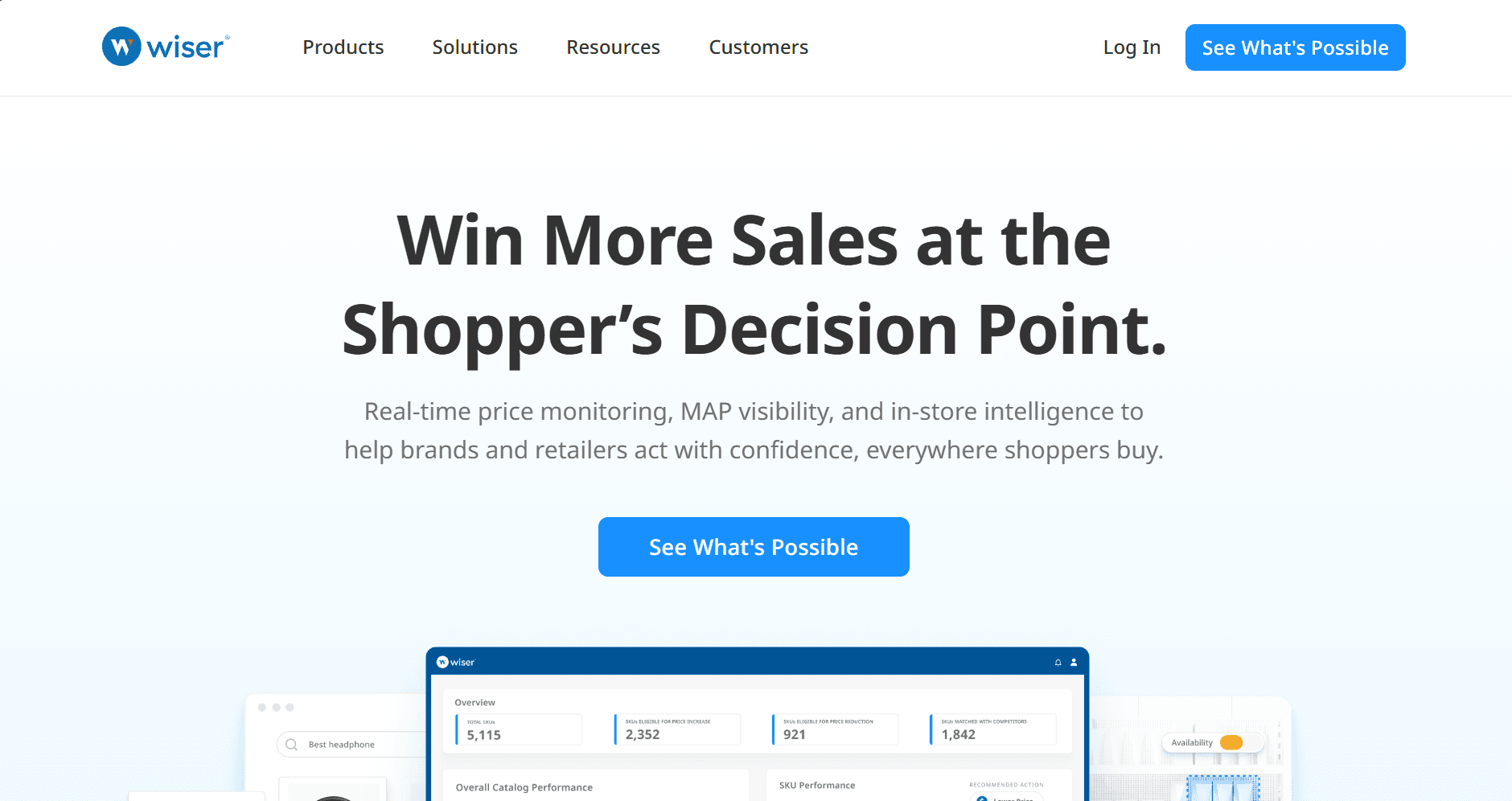
Wiser Solutions combines online and in-store competitor price monitoring across websites and marketplaces globally. It tracks price changes, promotions, out-of-stock products, and historical pricing patterns, so you can review the context behind a price move rather than just comparing prices. It also supports product matching, price and stockout alerts, CSV exports, and API delivery.
👍 Pros
- Wiser tracks prices, promotions, availability, and market trends, giving you more context than just the listed price.
- It supports product matching, making it easier to compare your products against the right competitor listings.
- It delivers pricing data through multiple channels, including dashboards, CSV files, APIs, plug-ins, and a Chrome extension.
- Wiser refreshes prices every 15 minutes, helping you act on current competitor prices.
- It tracks prices by region and in-cart price, covering competitors that adjust pricing by location or checkout stage.
👎 Cons
- Wiser doesn't publish pricing for Price Intelligence, so you'll need to contact sales.
- According to G2 reviews, it has a steep learning curve, making it harder for new users to adopt.
- It limits automated repricing to supported e-commerce platforms.
- Its automated product matching is less reliable for products without EAN or UPC codes.
Pricing
- You need to contact sales for a quote.
Best For
Retail price intelligence across a large catalog with frequent price updates across websites, marketplaces, and physical retail locations.
3. Intelligence Node: Best for High-Frequency Competitor Price Monitoring
Intelligence Node is a price intelligence tool built for high-frequency competitor price monitoring across large catalogs, with updates running as often as every 10 seconds. Its Price Intelligence product tracks competitor prices, price changes, discounts, stock status, and product movement down to the Stock Keeping Unit (SKU) level. It also has exact and similar product matching built into the workflow. The tool supports dashboards, email alerts, APIs, data exports, up to two years of historical pricing data, and data processing in 100+ languages.
👍 Pros
- It supports exact and similar product matching, covering direct matches and close alternatives.
- Intelligence Node tracks stock status, discounts, and price changes at the SKU level.
- It includes zip-code-level tracking for competitors that adjust pricing by location.
- Intelligence Node stores up to two years of historical pricing data.
👎 Cons
- Intelligence Node prices each project based on scope, with costs rising as you add SKUs, faster refresh rates, etc.
- It starts at $5,000/month, which can be costly for smaller catalogs.
- It requires a minimum 1-year subscription.
- It exports spreadsheet data by default, while JSON and XML extracts are available on request and may require extra scoping.
Pricing
It starts at $5,000/month, with a minimum 1-year subscription.
Best For
High-frequency competitor price monitoring across a large catalog, with product matching, regional tracking, and long-term pricing history.
4. Minderest: Best for Multi-Channel Price Monitoring
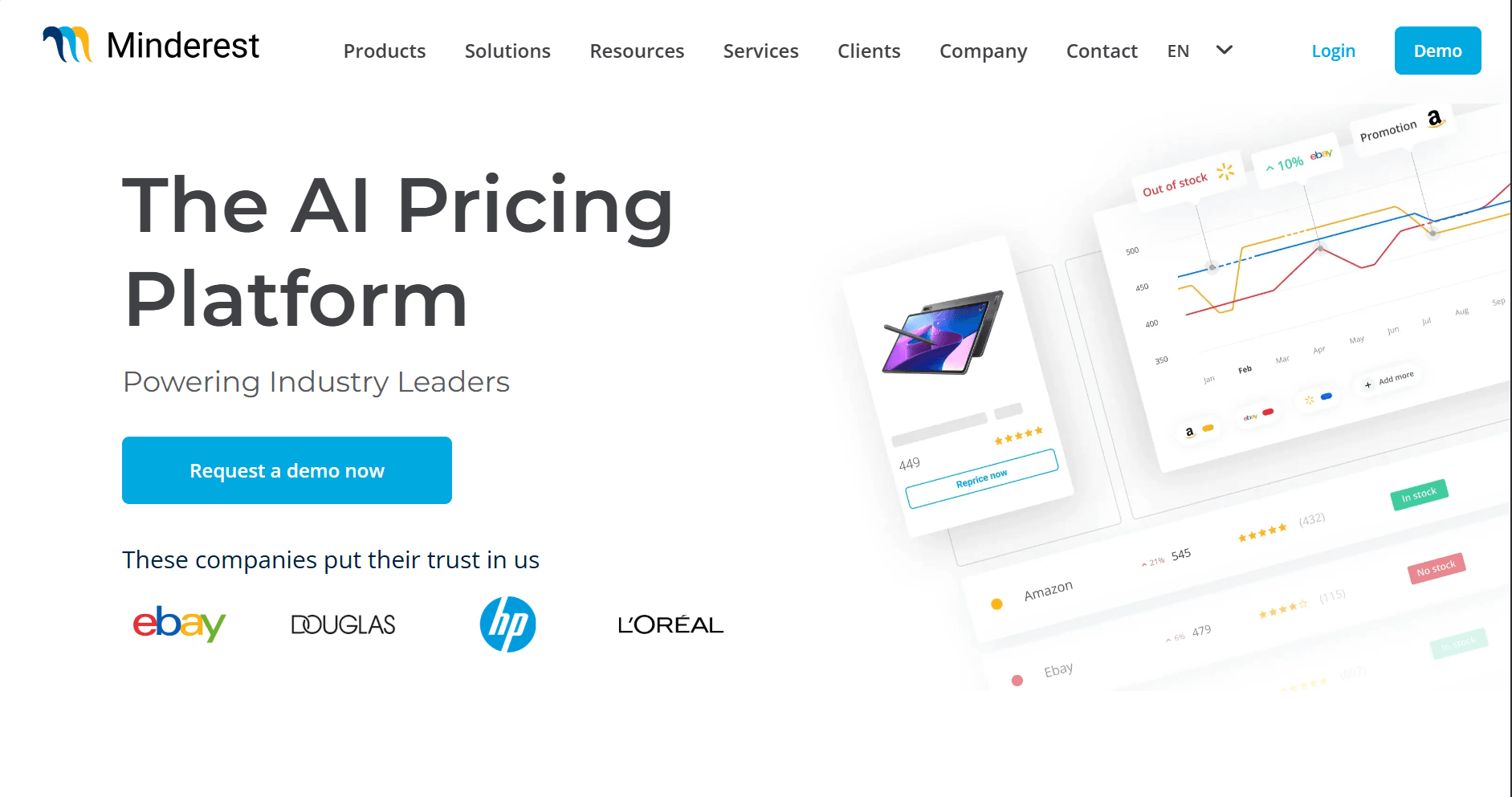
Minderest is a price intelligence tool for brands and retailers that need competitor price monitoring across multiple sales channels. It monitors prices, promotions, stock, and product data across e-commerce sites, marketplaces such as Amazon and eBay, comparison sites such as Google Shopping, and B2B portals, with daily price updates.
Minderest also matches identical, similar, and white-label products. For products without a European Article Number (EAN) or Universal Product Code (UPC), it combines AI-based matching with manual review to confirm accurate matches.
👍 Pros
- It supports identical, similar, and white-label product matching, including products that don't rely on standard identifiers such as EAN or UPC codes.
- Minderest covers multiple countries, languages, and currencies for retail price intelligence across markets.
- It lets you create custom reports and choose which fields to export.
- Minderest supports dashboards, CSV exports, API integrations, and browser-based price checks through InSite Analytics.
👎 Cons
- Minderest refreshes price monitoring data daily, which means it can miss intraday price changes.
- It uses manual matching when automation can't confirm product similarity, slowing setup for complex catalogs.
- Minderest requires a minimum three-month subscription contract.
- It uses separate pricing rates for online stores, marketplaces, and Google Shopping, increasing costs as your monitoring setup expands.
Pricing
- It uses custom pricing, which requires contacting support.
Best For
E-commerce teams that need AI-assisted price monitoring across marketplaces, comparison sites, shopping apps, and B2B portals.
5. Price2Spy: Best for URL-Based Competitor Price Tracking
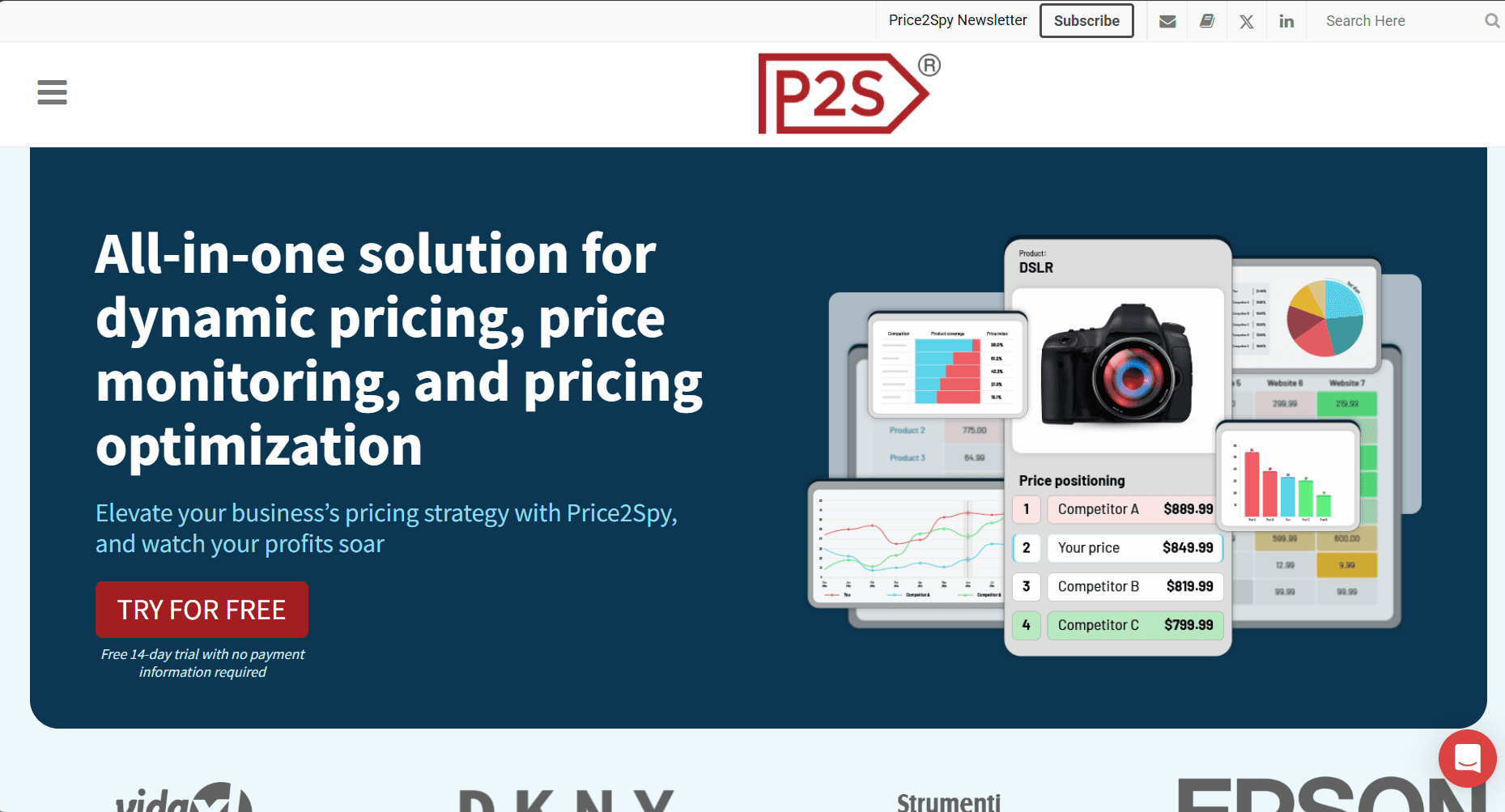
Price2Spy is built around product URL tracking. You add the products and competitor pages you want to monitor, then Price2Spy checks them for price or stock changes and sends alerts when either changes.
The tool also provides historical reports, pricing analytics, and market-overview reports, so you can review competitor price movements over time rather than reacting to each change in isolation. If URL tracking isn't enough, you can add marketplace monitoring and product matching to cover more competitor listings.
👍 Pros
- Price2Spy supports marketplace monitoring to track competitor prices beyond direct product URLs.
- It includes historical reports that show how competitors' prices changed over time.
- Price2Spy supports currency conversion for tracking prices across markets.
- It includes Minimum Advertised Price (MAP) monitoring for brands and distributors to detect reseller pricing violations.
- Price2Spy supports product variations to track prices across sizes, colors, pack sizes, and similar variants.
👎 Cons
- The Starter plan caps tracking at 500 URLs and 10 competitors.
- It reserves API access for the Premium plan.
- Price2Spy limits intraday price checks to eight per day on the Premium plan.
- It reserves custom data capture for the Premium plan.
- Price2Spy sells Automatch, repricing, screenshots, product matching, stealth IP traffic, and extra reports as paid add-ons.
Pricing
- It starts at $39.95/month, with a free 14-day trial.
Best For
Retailers and brands that use product URLs as the primary tracking source and need flexible product matching as their catalogs, marketplaces, or competitor sets grow.
6. Competera: Best for Enterprise AI Price Optimization
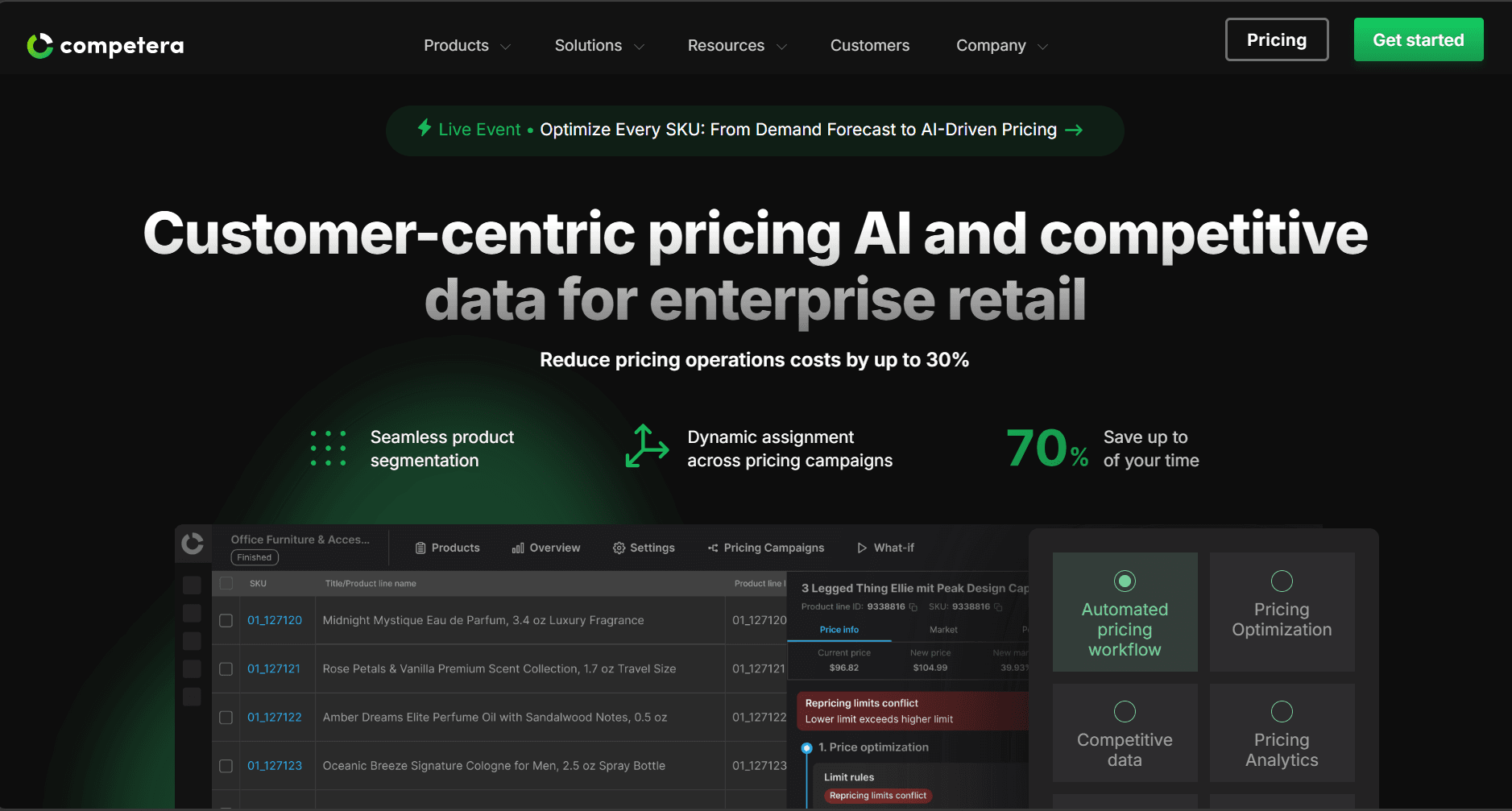
Competera is built for pricing teams that want recommendations, not just competitor price alerts. Unlike tools that react to competitor price changes alone, it factors in demand signals, margin constraints, product relationships, and business rules to help retailers decide which prices to change and why. It monitors competitor prices across 28 countries.
👍 Pros
- It supports what-if scenarios for testing pricing changes before applying them across your catalog.
- Competera combines competitive data, demand patterns, margin constraints, and pricing rules into a single pricing decision.
- Competera includes AI-driven and rule-based optimization, allowing you to combine automated recommendations with business constraints.
- It supports product matching through its Competitive Data product, helping connect competitor prices to the right product relationships.
👎 Cons
- The AI model runs on daily or weekly pricing cycles, making it unsuitable for fast intraday repricing.
- It requires clean sales, stock, and cost data from your ERP before AI recommendations can be used.
- Competitive Data uses pay-per-use pricing while the AI Pricing Platform uses custom pricing, making the total cost hard to estimate upfront.
- It can take up to 60 days to integrate Price Optimization.
Pricing
- It uses custom pricing, which requires contacting support.
Best For
Enterprise retailers that need AI price optimization, what-if scenarios, and competitive data in one pricing workflow.
7. Zenrows: Best for Building Custom Price Intelligence Pipelines
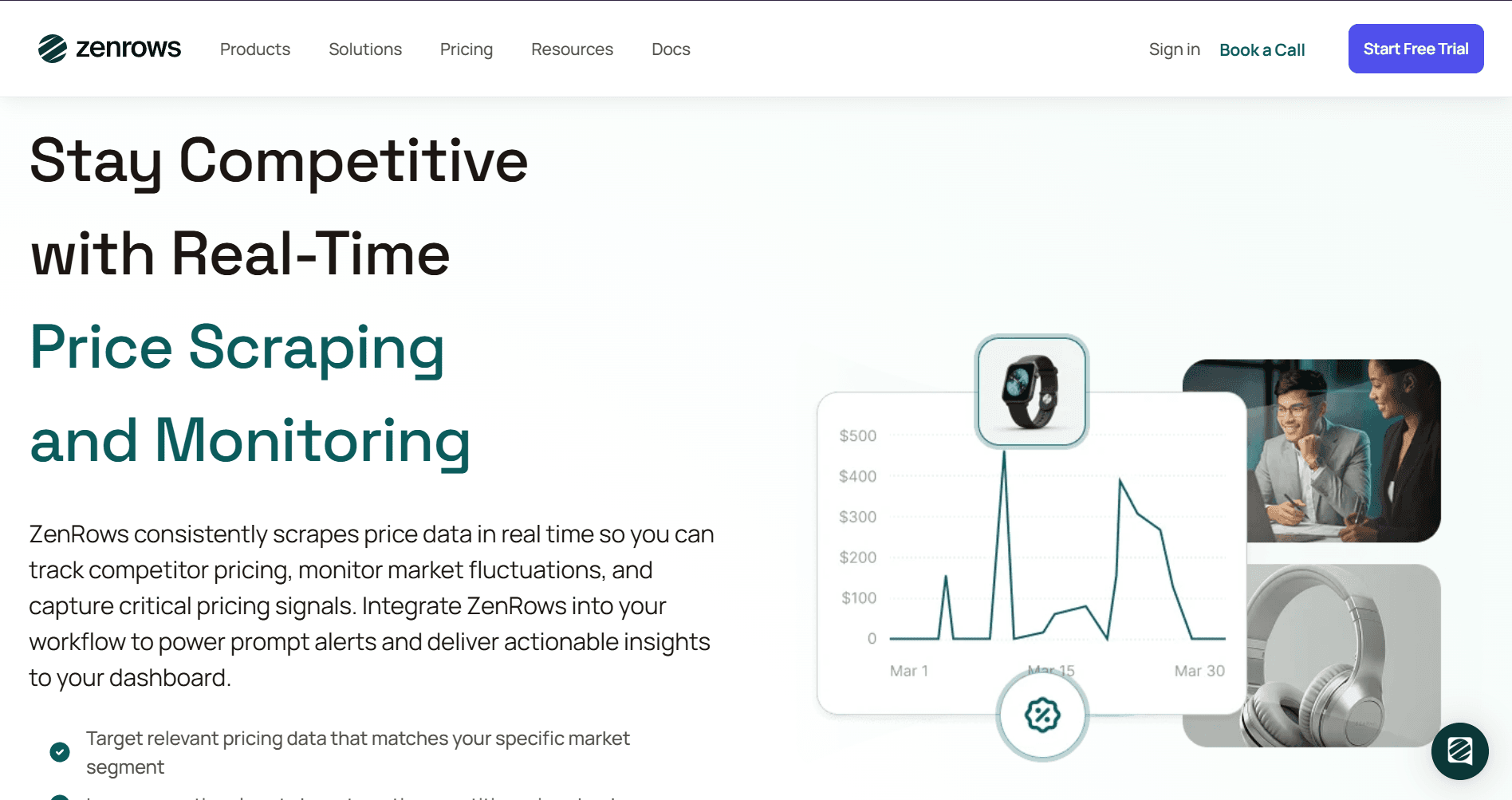
Zenrows Fetch handles the anti-bot layer that blocks most price intelligence pipelines, including Cloudflare, dynamic rendering, IP bans, and geo-blocking, without requiring custom infrastructure. Data teams use it to pull structured pricing data from e-commerce sites, marketplaces, and competitor pages at scale. It also connects directly to no-code workflow tools, including Zapier, n8n, and Make for teams that want automated pipelines without custom integration work.
👍 Pros
- Zenrows supports real-time price monitoring, helping you track competitor price changes as they happen and act on current data.
- It includes a built-in anti-bot auto-bypass.
- Zenrows includes Premium Proxies with geo-targeting to help you collect localized prices data from different regions.
- It supports session handling, which helps maintain the same IP address across related requests in multi-step pricing flows.
- Zenrows supports user action automation suitable for scraping dynamic price data.
- You design your extraction schema to match your catalog structure, giving you control over product matching accuracy across sites.
- It supports multiple output formats to match your use case, including HTML, JSON, Markdown, and screenshots.
👎 Cons
- More suitable for teams building custom price intelligence workflows.
- Zenrows doesn’t include a built-in price intelligence dashboard.
Pricing
It starts at $69/month, with a 14-day free trial and no credit card required.
Best For
Developers and data teams that want to build a custom price intelligence pipeline without SaaS overhead.
To learn more, read our article on Web Scraping for Competitive Price Intelligence.
Here’s a quick snapshot of the price intelligence tools we’ve covered, including what each one is best for, how it’s priced, whether it offers a free trial, and whether you get direct access to the scraping infrastructure.
| Tool | Best For | Pricing Model | Free Trial | Scraping Infrastructure |
|---|---|---|---|---|
| Prisync | E-commerce competitor price tracking and dynamic repricing | Starts at $99/month | 14-day free trial | ❌ Proprietary scraping, no access to the data collection layer |
| Wiser Solutions | Enterprise retail price intelligence | Custom pricing | Not available | ❌ In-house data collection, closed system. API is for data output only |
| Intelligence Node | High-frequency competitor price monitoring | Starts at $5,000/month | Free demo | ❌ Enterprise platform with fully managed internal scraping |
| Minderest | Multi-channel price monitoring | Custom pricing | Not available | ❌ Closed system. You configure what to track, but not how it’s scraped |
| Price2Spy | URL-based competitor price tracking | Starts at $39.95/month | 14-day free trial | ❌ Uses its own stealth IP technology, no external scraper access |
| Competera | Enterprise AI price optimization | Custom pricing | Proof of Concept available | ❌ In-house competitive data platform, closed pipeline |
| Zenrows | Custom price intelligence pipelines | Starts at $69/month | 14-day free trial, no credit cards required | ✅ Direct scraping infrastructure. Build your own pipeline, bypass anti-bots, and scrape any site at scale |
Conclusion
Managed price intelligence tools work well when their coverage, refresh rates, and built-in fields match your pricing workflow. But when those tools don’t cover the sites, fields, or collection logic your pricing decisions depend on, you need a custom price intelligence pipeline.
Zenrows enables you to build that pipeline by scraping the sites, fields, and regions that matter to your pricing workflow. It handles anti-bot bypass behind the scenes and returns pricing data in multiple output formats to match your use case.
Try Zenrows for free now or speak with sales!
FAQ
What is the difference between price monitoring and price intelligence?
Price monitoring tracks competitor price changes. Price intelligence adds context such as product matches, availability, promotions, regions, sellers, and price history, helping you decide whether a price change needs action.
What data should price ontelligence software track?
It should track the fields that affect your pricing decisions, such as product name, SKU, competitor URL, price, promotion, stock status, seller, shipping cost, region, currency, and timestamp. If standard tools don’t capture your required fields, a scraping API like Zenrows can help you extract that data directly.
When should you use a custom price intelligence pipeline?
Use a custom pipeline when standard price monitoring tools don’t cover the websites, regions, or pricing fields your workflow requires. A scraping API like Zenrows lets you collect that custom pricing data while handling anti-bot bypass behind the scenes.